
Wild Weather

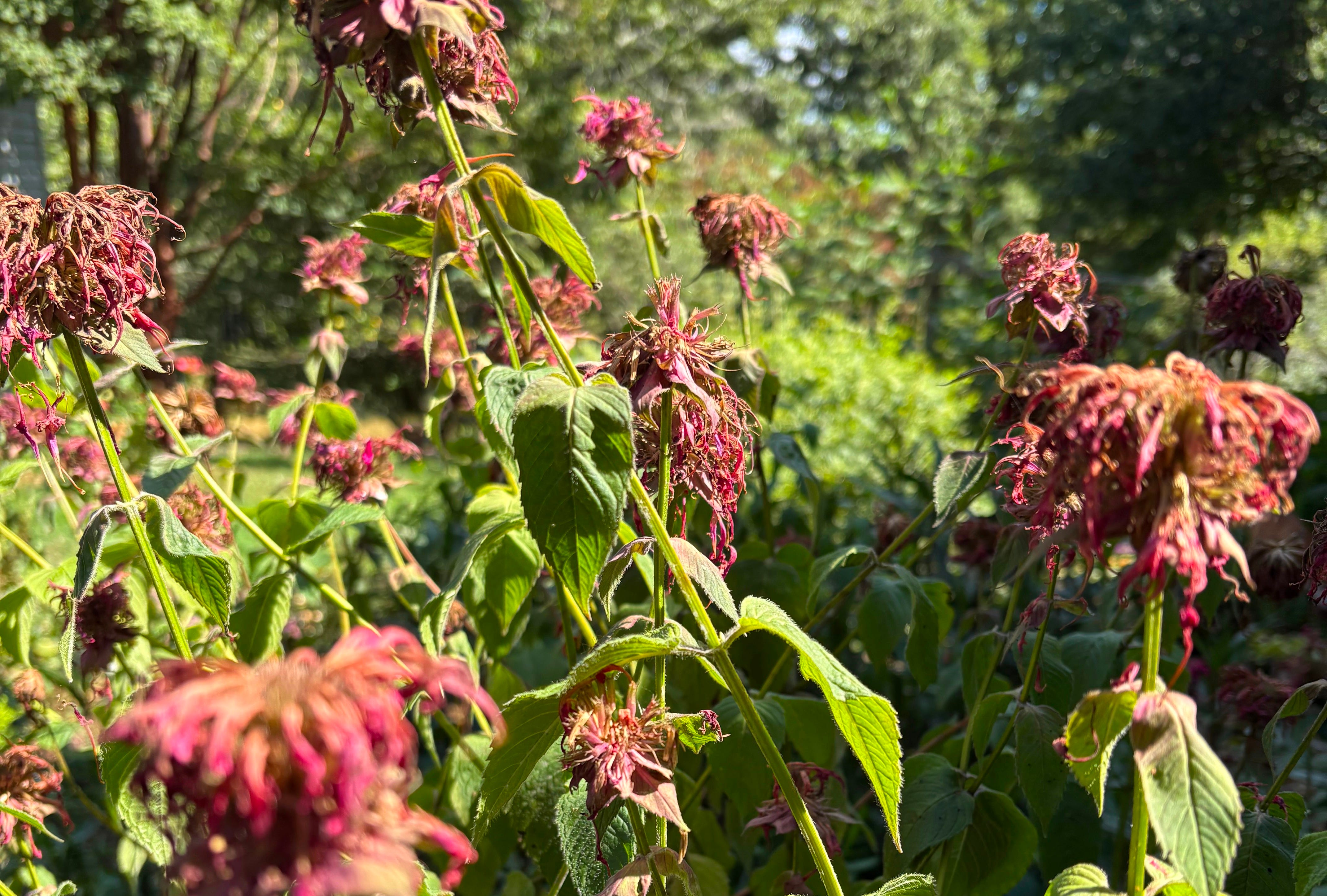
Whenever people tell me they don’t believe in a higher power, I say, “Weather?” The weather in Georgia has been so hot for the past couple of weeks that there’s nothing to do but wait it out. The humans can hide in the house if they want, but the horses can’t. Even under the shade of a shriveled tree, they sweat until they look like they’ve been hosed down—which would be a great idea if there were any water to spare, but there’s not. Whatever’s left in the thirty-foot well has to be saved for drinking, cooking, and flushing. Meanwhile, the guinea hens pant on the highest rail of the split-rail fence, and the chickens abandon their nesting boxes for any roost with a breeze. With no public water system to deliver more water here, rationing is a life choice instead of a moral one. The weather is in charge, and its morality is nowhere in sight.
The same is true when midsummer thunderstorms blow in and soak the ground, loosening the roots of trees before following up with a second punch of high winds that drop them like dominoes. Does anyone know what that looks like anymore? The other day, I came upon a dogwood that had been uprooted to lean on a pine that had been uprooted to lean on a poplar. They looked like a bunch of exhausted revelers who had all fallen asleep on each other, with the one at the end bearing their collective weight. Since the expense of taking them all down would exceed my quarterly tax payment, they’ll stay where they are, like all the other fallen trees in my woods, decomposing in plain sight for as long as I live here.
I’m not complaining, exactly, since there’s never been any question that local weather conditions are beyond my control. Yes, I can fund movements focused on planting trees, lowering emissions, and putting brakes on runaway development that lays the land bare. Yet even before climate change gained full steam, there were long droughts here, strong tornadoes, and ice storms that shut the whole county down. If the weather is the first thing most of us comment on when we run into each other in town, it’s because we’re all in its grip. Like it or not, the weather confirms our mortal limits. The most we can do is keep checking the forecast and prepare as best we can for what is headed our way.
I never thought of weather as part of the wildness of the world, but I’m thinking about that now. Like a mountain panther, like a swollen river, like a sudden rock fall from the exposed face of a canyon, weather belongs to the untamed part of creation. It’s not out to get us; it’s doing what is in its nature to do, responding to conditions and acting from necessities we know next to nothing about. In this way, wild weather participates in the wholeness of creation, and not just the parts that benefit humans or make us feel safe.
The only time I taught a college course on the biblical book of Job, the class began with an art exercise. “Each of you has a blank sheet of white paper in front of you,” I said to the half-dozen students who had signed up, “and there are plenty of crayons, chalk, colored pencils, and felt markers for you to share—so take your pick and do anything you want with the assignment, because there are no rules.”
Then I told them to draw a picture of themselves in the universe.
Ten minutes later, they shared their handiwork, which was all over the place. Some had drawn themselves as stick figures while others had given themselves muscles like Captain America. Some went heavy on primary colors while others used only a charcoal pencil. The one thing all of the pictures had in common was the position of the artist on the page. Whether they had made themselves large or small, detailed or indistinct, they had all located themselves at the center of the universe.
This was apparently Job’s problem too, though he really did have a lot to complain about. For no reason he could discern, the fire of God had fallen from heaven and killed his sheep and servants. Enemies had stolen his camels. A great wind had struck the house where his children were eating and drinking and killed them too. Job was shattered by the divine injustice of it all. When he asked God to tell him what he had done to deserve such miserable treatment, all Job heard was silence.
Then, nine-tenths of the way through the book, God finally spoke up, only the subject was not justice but creation. Without stopping to take a breath, God asked Job sixty-something questions in a row—all rhetorical—about where Job had been when God made snow, stars, lightning bolts, and mountain goats (among many other things). “Is the wild ox willing to serve you?” God asked Job.[i] “Is it by your wisdom that the hawk soars and spreads its wings toward the south?”[ii]
Job got the point. “See, I am of small account,” he said, when he finally got a chance to say something; “What shall I answer you? I lay my hand on my mouth. I have spoken once, and I will not answer, twice but will proceed no further.”[iii]
The next time the teacher asks him to draw a picture of himself in the universe, Job may only include his hands, gripping the edge of the paper while the rest of him flaps in the wild wind like a pennant. Or he may still be at the center of the page, but much smaller this time, surrounded by all the other miraculous creatures God made just as God made him.
You can decide for yourself whether this is a story about God bullying a miserable man into divine submission, or a story about God offering a swollen man a life jacket that restores him to his true size. Either way, there is consolation in discovering that you’re not the only scared or hurt creature out there, and that awe is an accessible analgesic for pain. I’m going to try and remember that while I’m sweating out the rest of this heat wave, waiting for the wind to change. Because I’m one of the players in the story and not the god.
[i] Job 39.9 NRSVUE
[ii] Job 39.26
[iii] Job 40.4-5
“You can decide for yourself whether this is a story about God bullying a miserable man into divine submission, or a story about God offering a swollen man a life jacket that restores him to his true size. Either way, there is consolation in discovering that you’re not the only scared or hurt creature out there, and that awe is an accessible analgesic for pain.”
I am grateful you offered this insight to us in this way. Thank you.
This is a beautiful reminder that we humans are not omnipotent. I am wondering where I would place myself on the paper...
I believe the best image is of the three uprooted trees leaning against each other--a dogwood against a pine against a poplar. All trees, but distinctly different relying on each other! I believe there is a sermon here!