
Undesirables

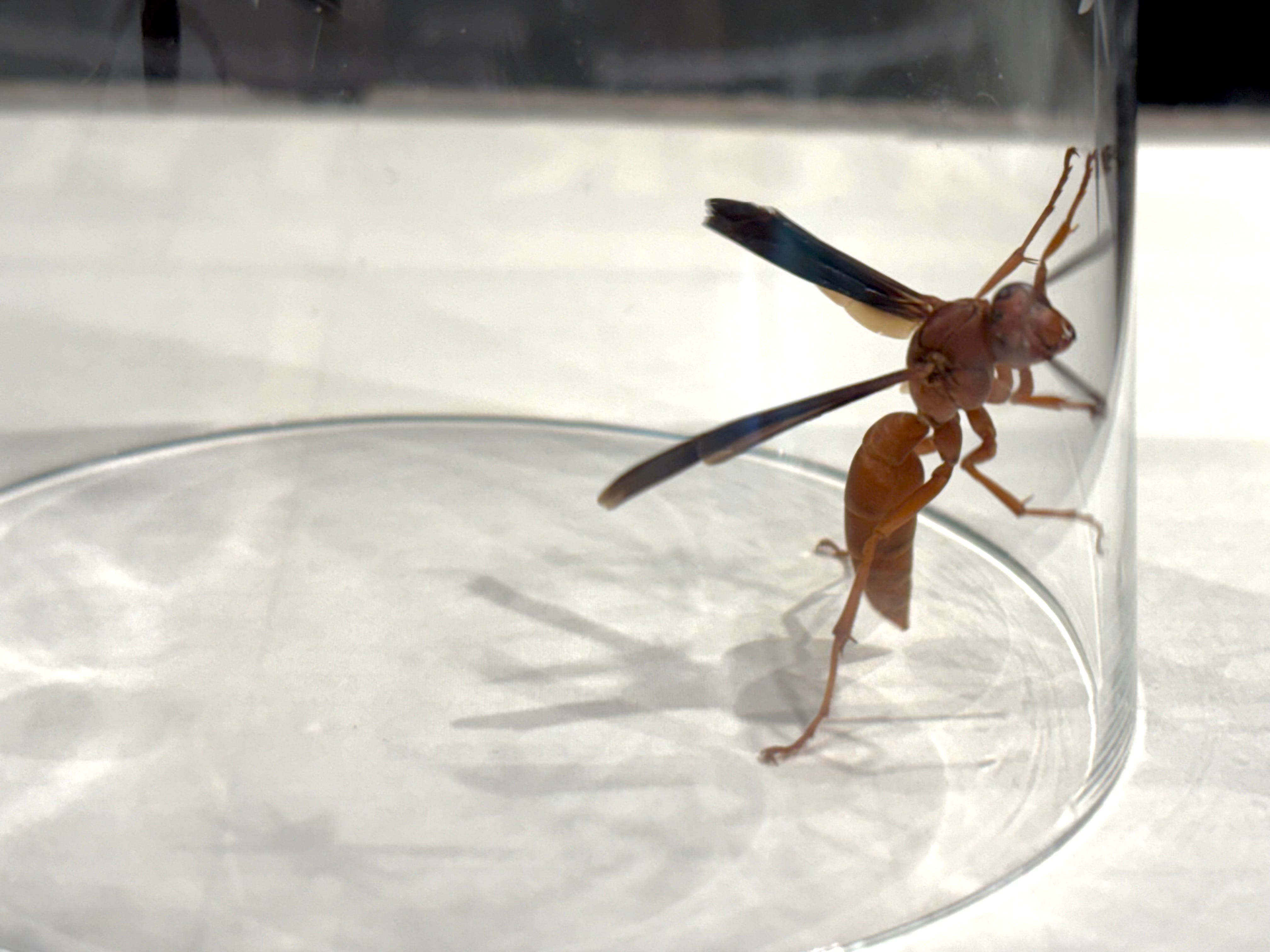
I can almost see out of my right eye again. Over the weekend, while I was pulling horse nettle from my garden before it could spread, a wasp flew into the small space between my eyes and my glasses. We both panicked, which involved lots of swatting (on my part) and thrashing (on the part of the wasp). When the sting landed on my right eyelid, I batted both the insect and my glasses to the ground. The wasp made a clean getaway, but I thought about it often in the next few days, trying to keep Benadryl from dripping into my eye as I waited for the swelling to go down.
I’ve been stung before when I got too close to a nest during maternity season, but this time wasn’t like that. I was nowhere near an eave or a window frame. The wasp wasn’t dropping from above, but flying horizontally across the garden. Our collision had the hallmarks of a chance run-in between two parties who assumed each other’s ill will and struck out instinctively, with no time to think of an alternative.
Newly alert to wasps, I noticed two more on some blooms in my garden, both of them with thin red bodies and black wings. I’d seen others like them inside my house, crawling sluggishly across the floor when their time was up. What kind were they? Did they die after they stung something, or was that only honeybees? Did males and females both have stingers? Something about my injury made me wonder these things, as I had never wondered about them before. Every time I looked in the mirror, I saw the evidence of an intimate encounter—but with what, exactly?
A quick search of “wasps in northeast Georgia” told me that I had been stung by a red paper wasp, one of the most common species where I live. The more I learned, the more I wanted to know about insects I had never identified as anything but antagonists before. Did you know there are “social” wasps and “solitary” wasps? I didn’t. Solitary wasps, like mud daubers, build and stock their own birthing chambers. Social wasps, like red paper wasps and bald faced hornets, make communal nests from homemade paper and defer to fertile queens. Only the females sting.
But they do more than reproduce and defend themselves. Red paper wasps also control garden pests such as aphids and beetle larvae. They pollinate wildflowers and food crops. They feed birds (cardinals, blue jays, and chickadees all love to eat them). I think they may also taste like wasabi to my dogs, who snap at them and look pleased when they are able to crunch one between their teeth. I laughed at this until I found a close-up of a red paper wasp’s face, with bright crimson cheeks and eyes that look like the surface of Mars from outer space. Such beauty.
My point is that red paper wasps do not exist to hurt or frighten me. Like so many other “undesirables”—spiders, bats, snakes, and vultures, to name just a few—they have other things to do in this world, which are not chiefly to harm me. They are free garden helpers. They regenerate forests. They are the clean-up crew for roadkill that the county never gets around to. They take their place in the food chain.
I can’t say the same thing about the humans who antagonize me, but it’s worth wondering why I don’t want to know more about them, too. The sting is all that registers—the social one as well as the solitary one—and once stung, always stung. I assume ill will (especially in a confined space) and start swatting. To be fair, the fight goes both ways, but I am far more conscious of my injury than my stinger—and I would like to think of some alternatives now that both of my eyes are open for a minute or two.
To see the beauty and be curious about a wasp that stung you takes higher-plane thinking. I think of Richard Rohr's quote, "Everything belongs", but didn't know that applied to wasps, and surely this doesn't apply to snakes. 😉
May we all be curious and see the beauty in each other, especially those who "sting" us. And may we come to recognize and own our propensity to sting, as well.
I had a similar experience with a honey bee, while in my car...stopping at a red light, windows open, I had a bee visitation between my left eye and the lens of my glasses. Luckily, I did not get stung--hope you can see straight and clear by now, well and ready to read this!
Every evening after supper, I need to walk through a thick border of lavender, to get to my outdoor faucet to water the garden...the lavender is loaded with bumble bees! I just walk through the purple stalks while they hover and hum...I really believe the bees know me, and know I will not harm them. They go about their business, and I go about mine. A fine arrangement.